THE LABS
Built around your syllabus, not ours.
Below is what we're building first. The order and the detail are still open — the first departments we work with will decide both.
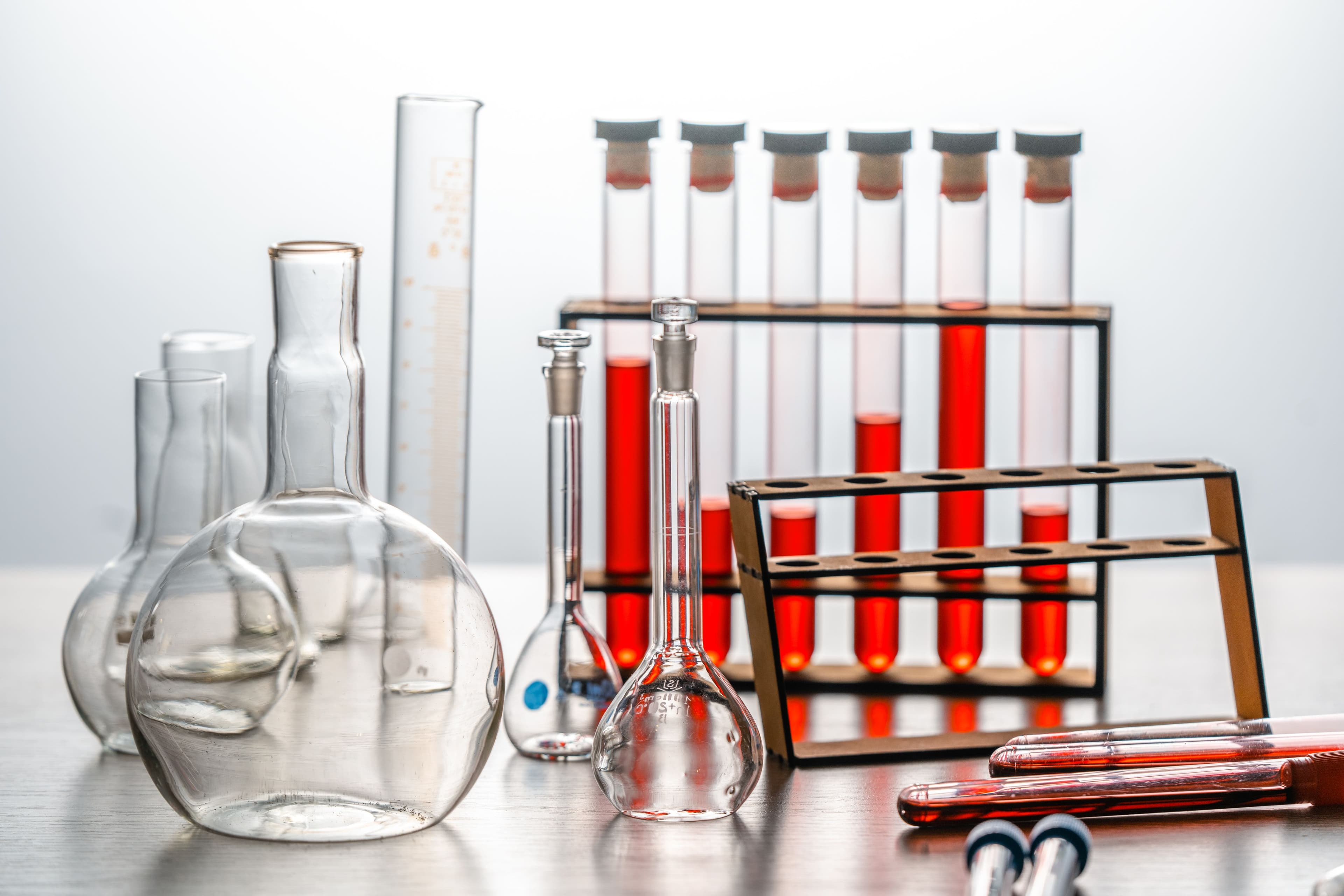
Chemistry
The discipline where the gap between reading a method and running it is widest — and where a mistake in the real lab is expensive or dangerous.
- Acid–base titration to endpoint
- Rates of reaction under varied concentration and temperature
- Qualitative analysis of unknown salts
- Simple organic synthesis and purification
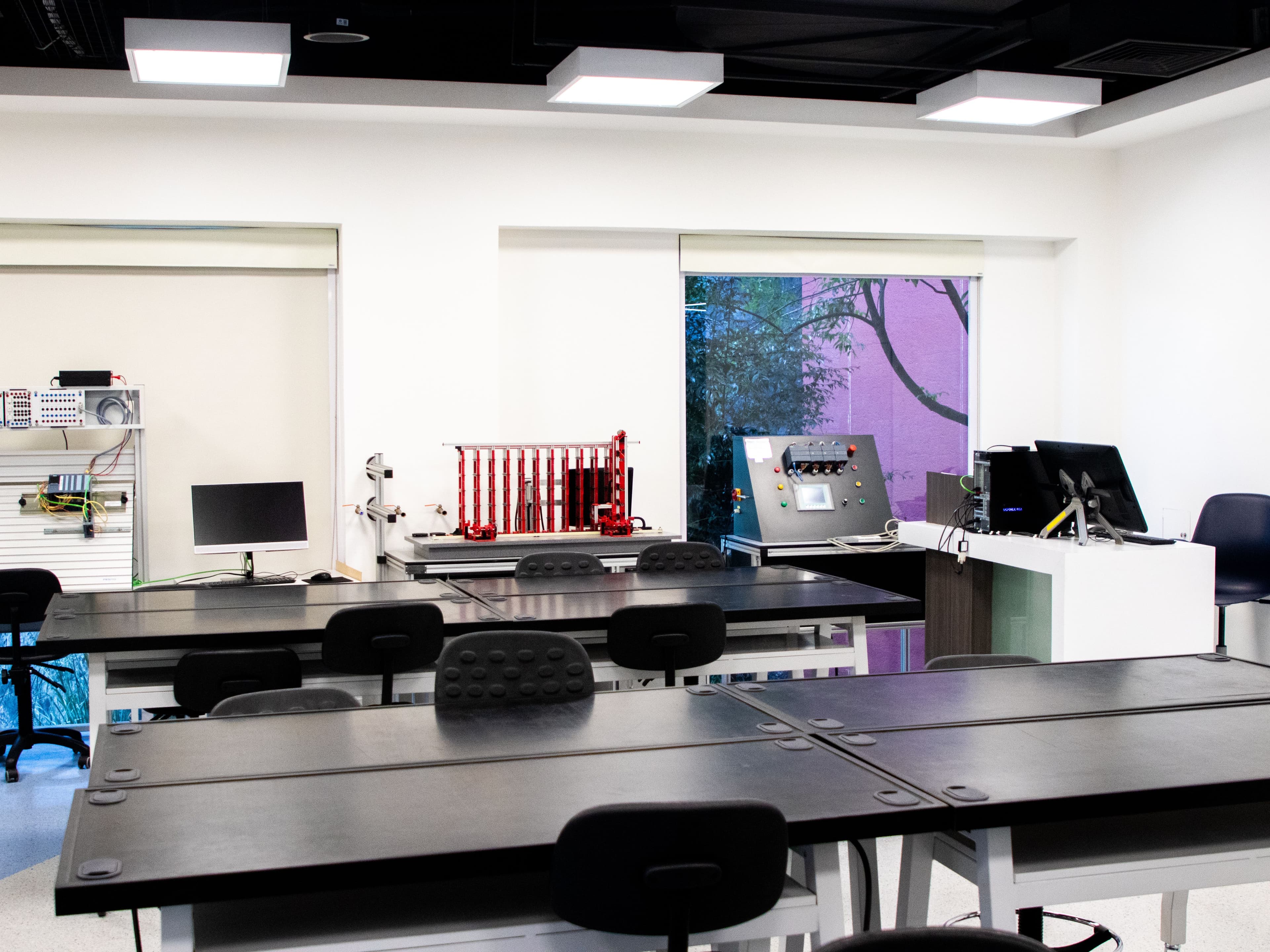
Physics
Apparatus that never drifts out of calibration, never goes missing, and lets a student repeat a measurement until the method makes sense.
- Simple pendulum and determination of g
- Forces on an inclined plane
- Series and parallel circuits, Ohm's law
- Refraction and lens focal length
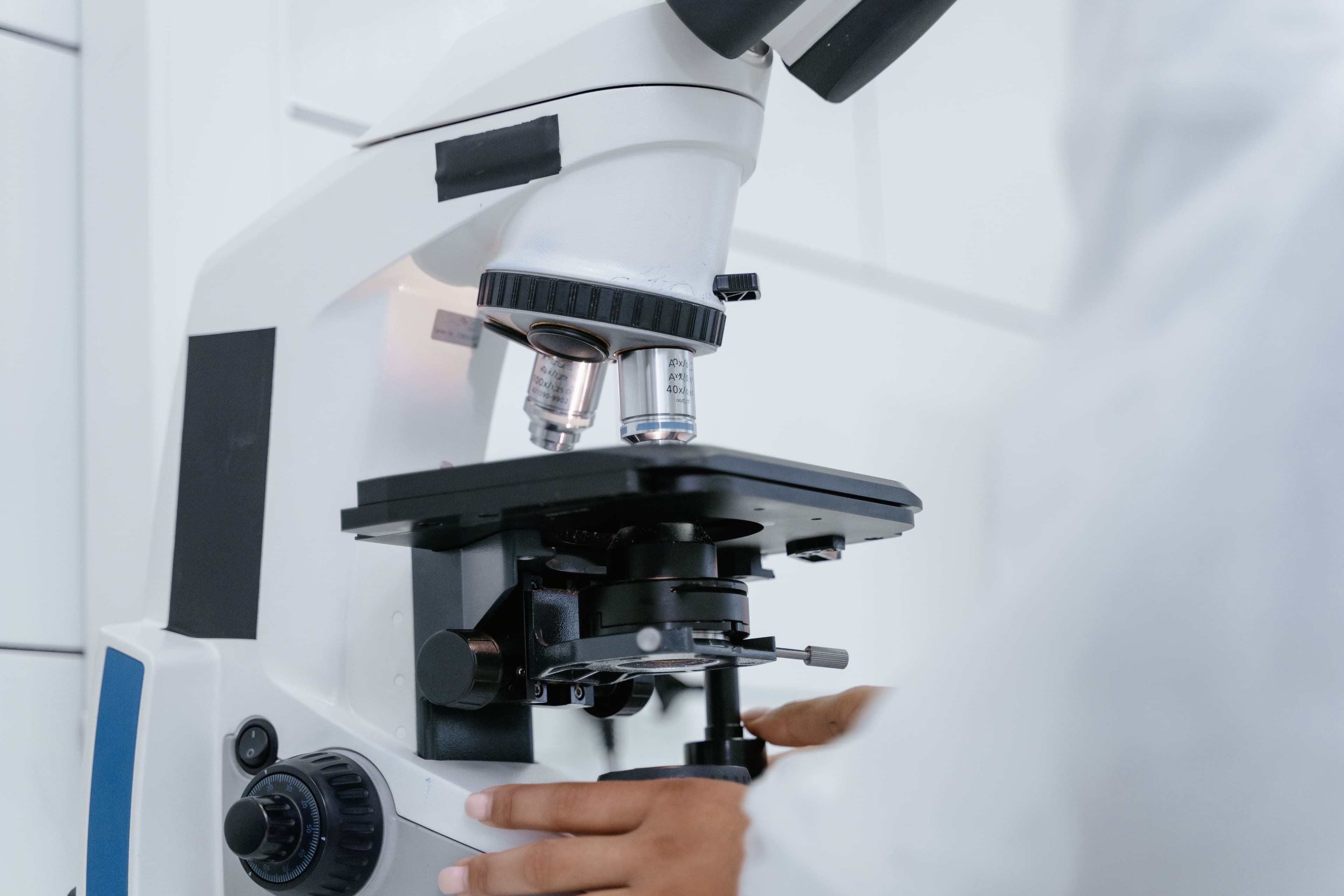
Biology
Specimens and prepared slides cost money and run out. Here they don't, and dissection carries no ethical cost.
- Light microscopy and slide preparation
- Cell structure and osmosis
- Comparative dissection
- Enzyme activity under varied pH
From the bench to the mark scheme.
Inside the LaboraVR lab
A guided cation test, from the bottle to the mark-scheme observation.
What the student sees
The real guided lesson in VR: the lab, the questions, and the feedback on a wrong answer.
The lab in 360°
Look around the lab, then watch three cation tests at the bench.
Real screens from the chemistry, physics and biology practicals.
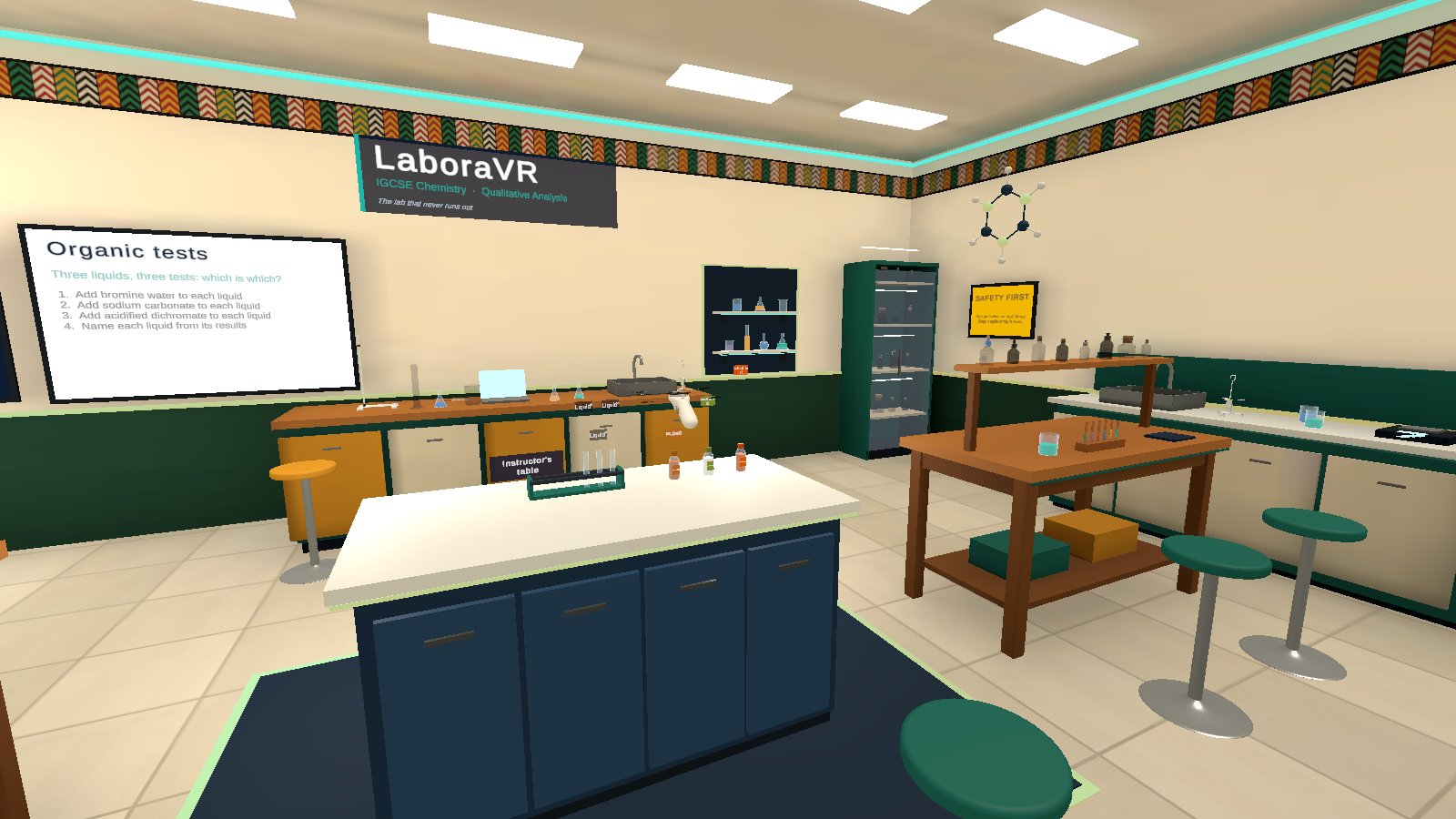
Three unknown liquids, identified with bromine water, sodium carbonate and acidified dichromate.
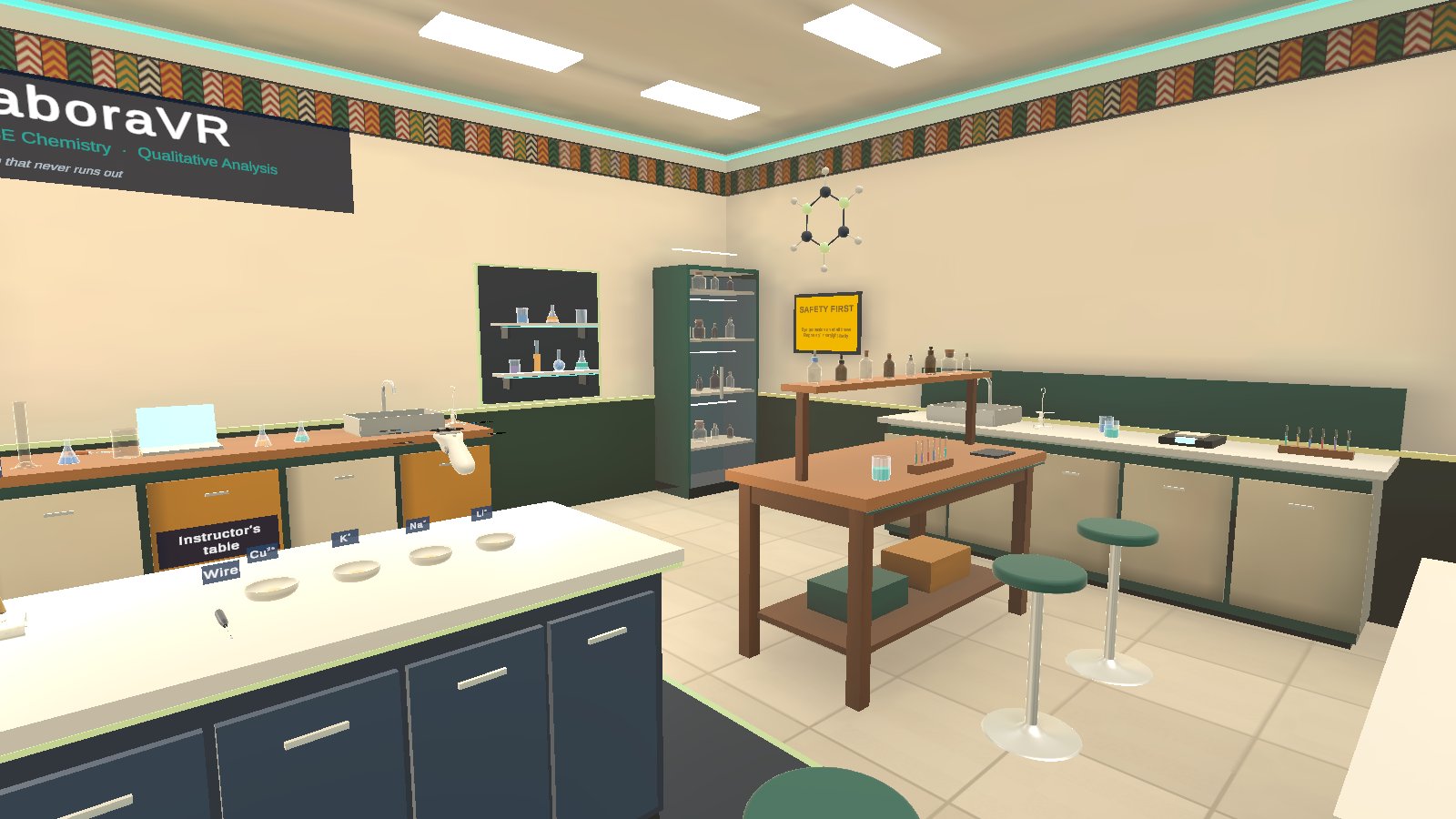
The flame tests bench, seen from the starting position.
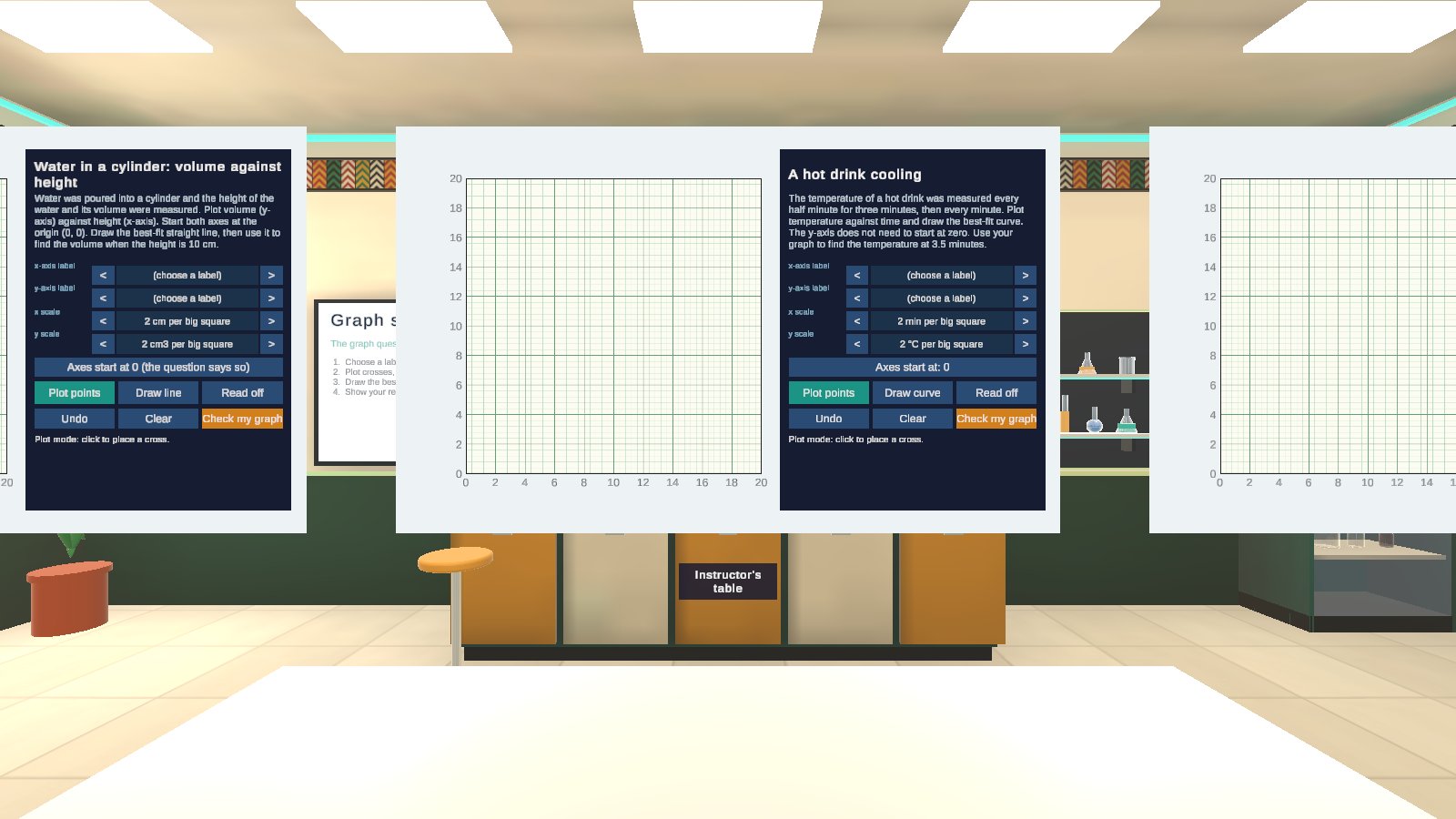
Drawing and reading graphs from a set of results.
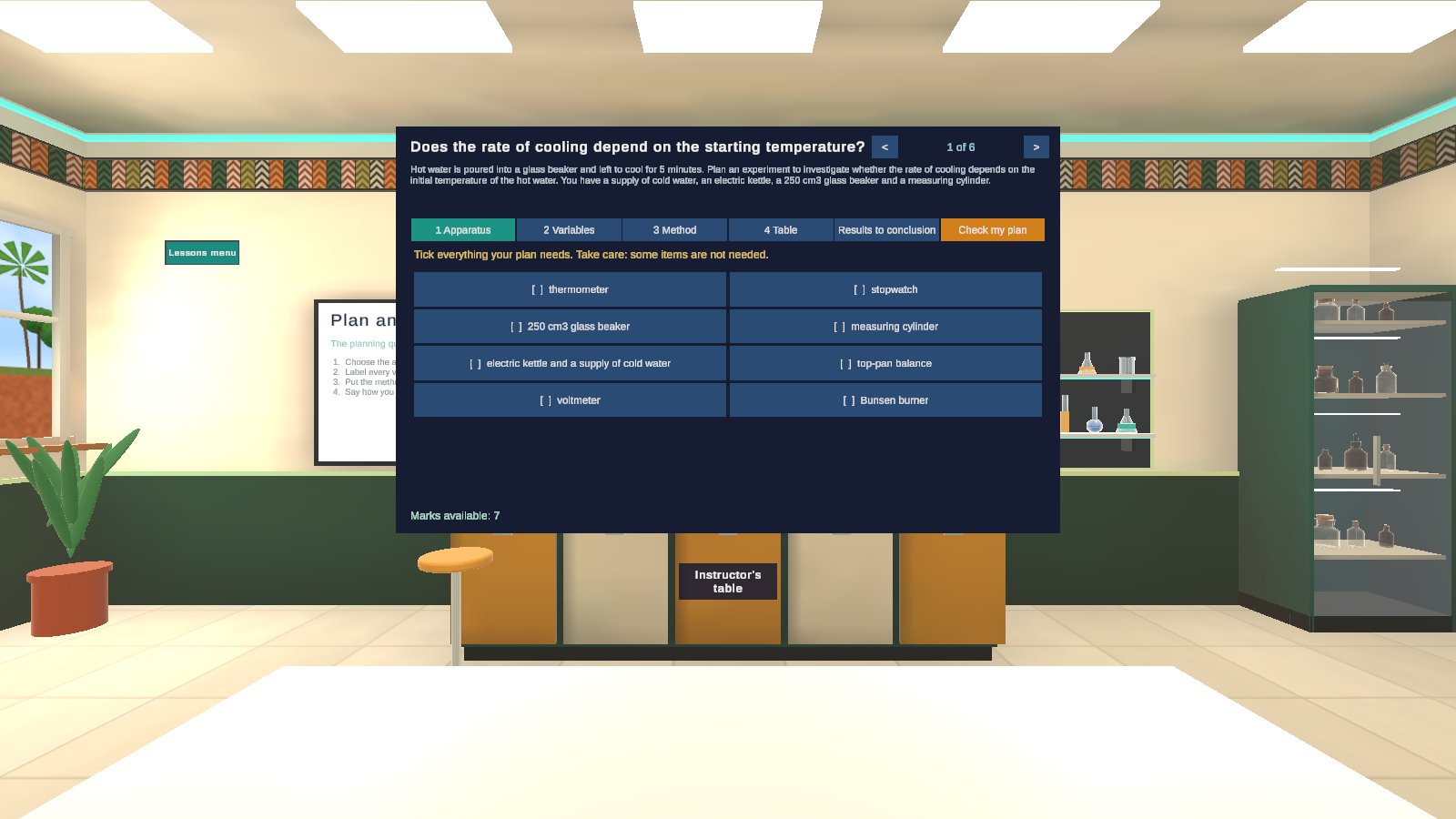
Planning an experiment before any apparatus is used.
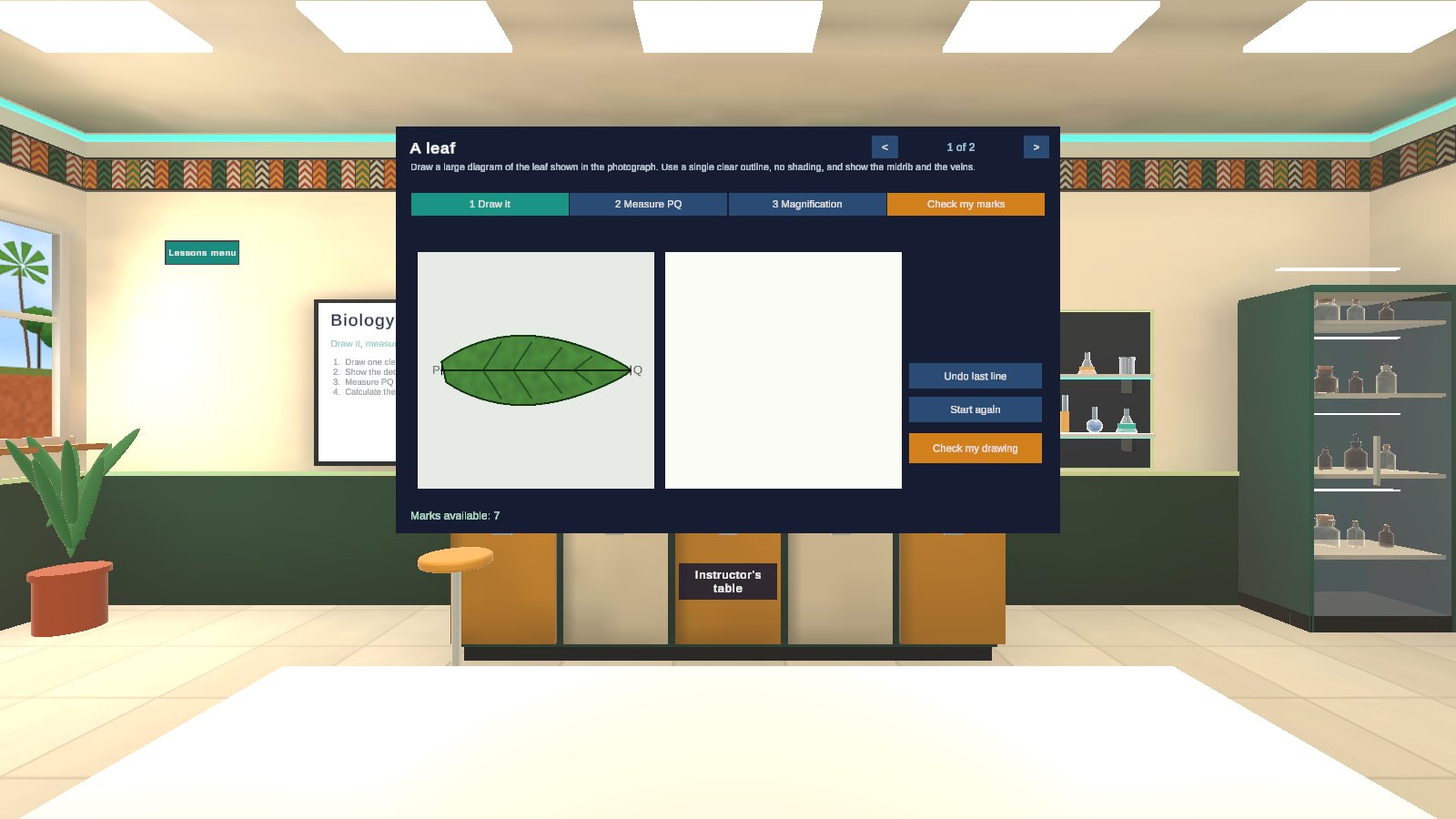
The biology drawing board, for labelled drawings of specimens.
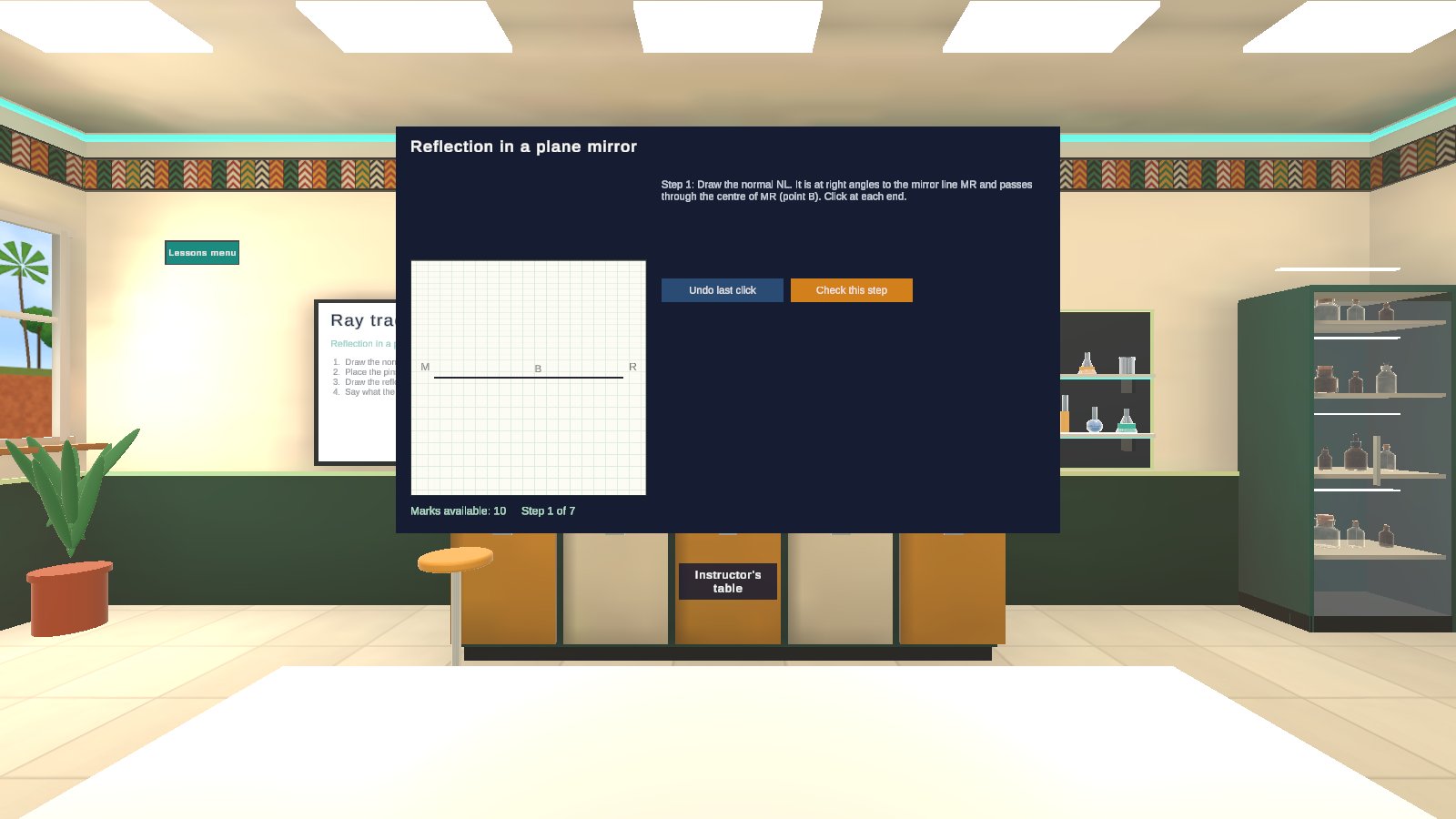
A physics ray trace through a lens or mirror.
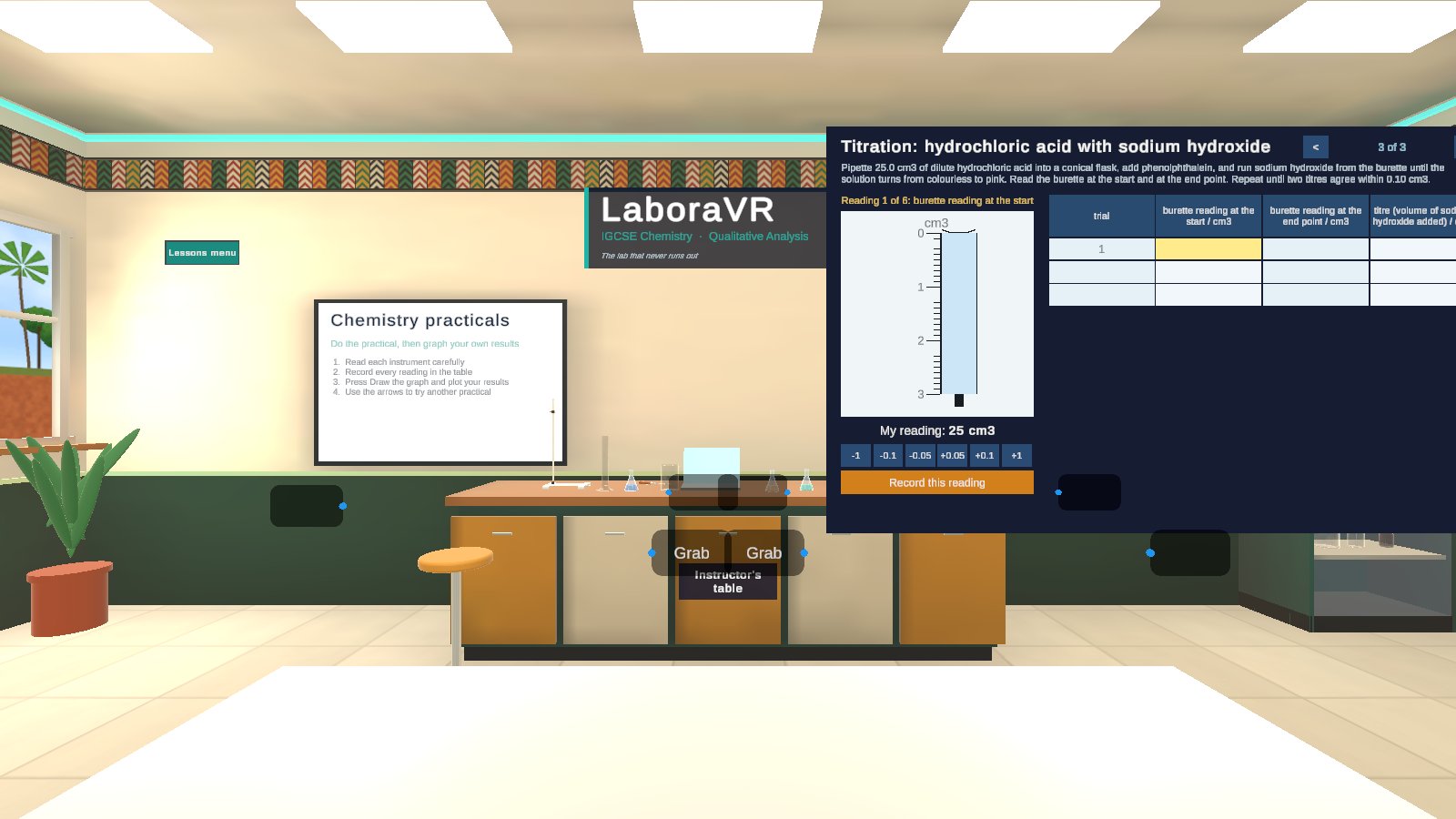
The acid–base titration practical.
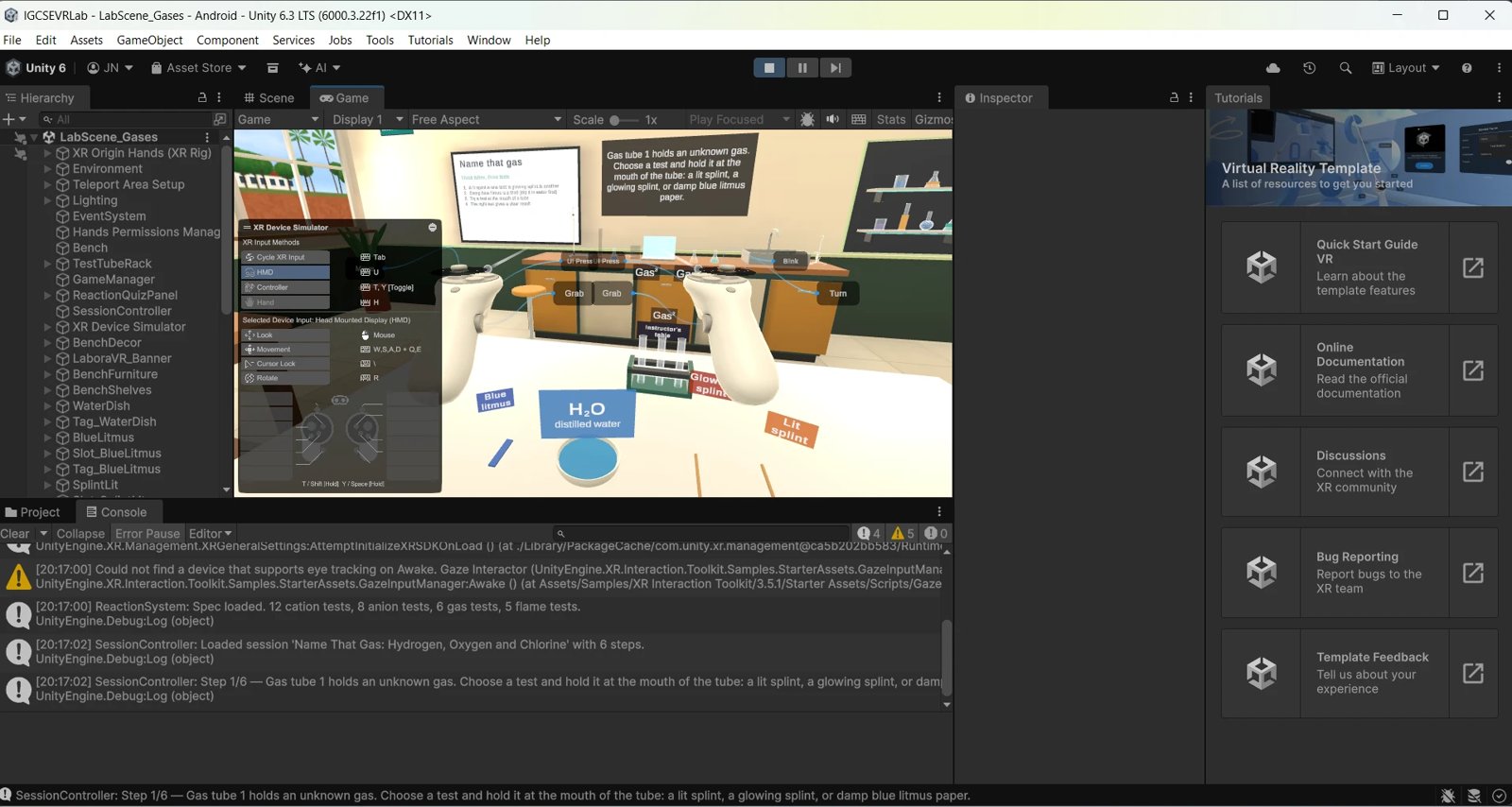
Identifying a gas, seen from the student view of the lab.
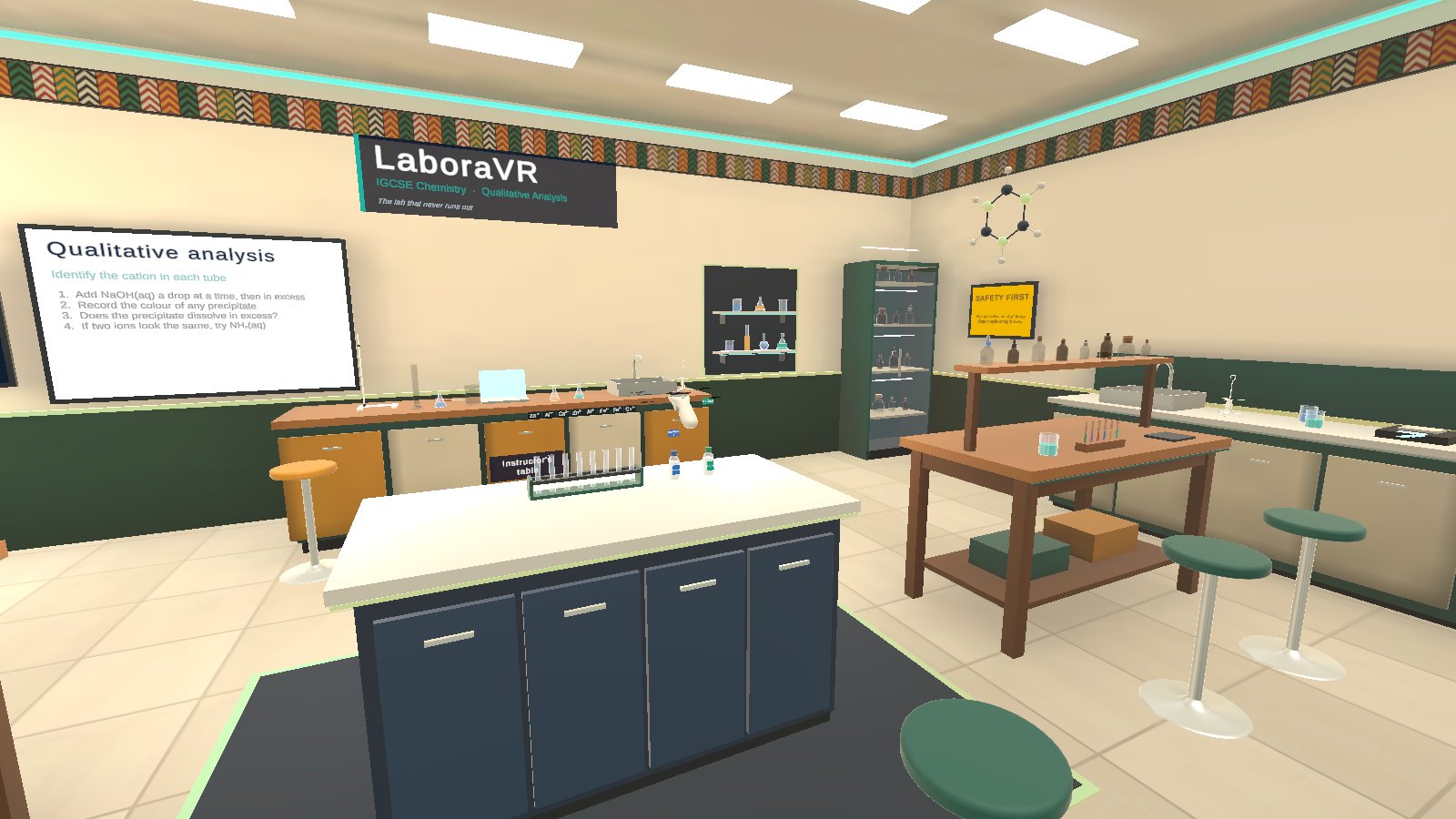
The qualitative analysis lab, as a student sees it at the start.
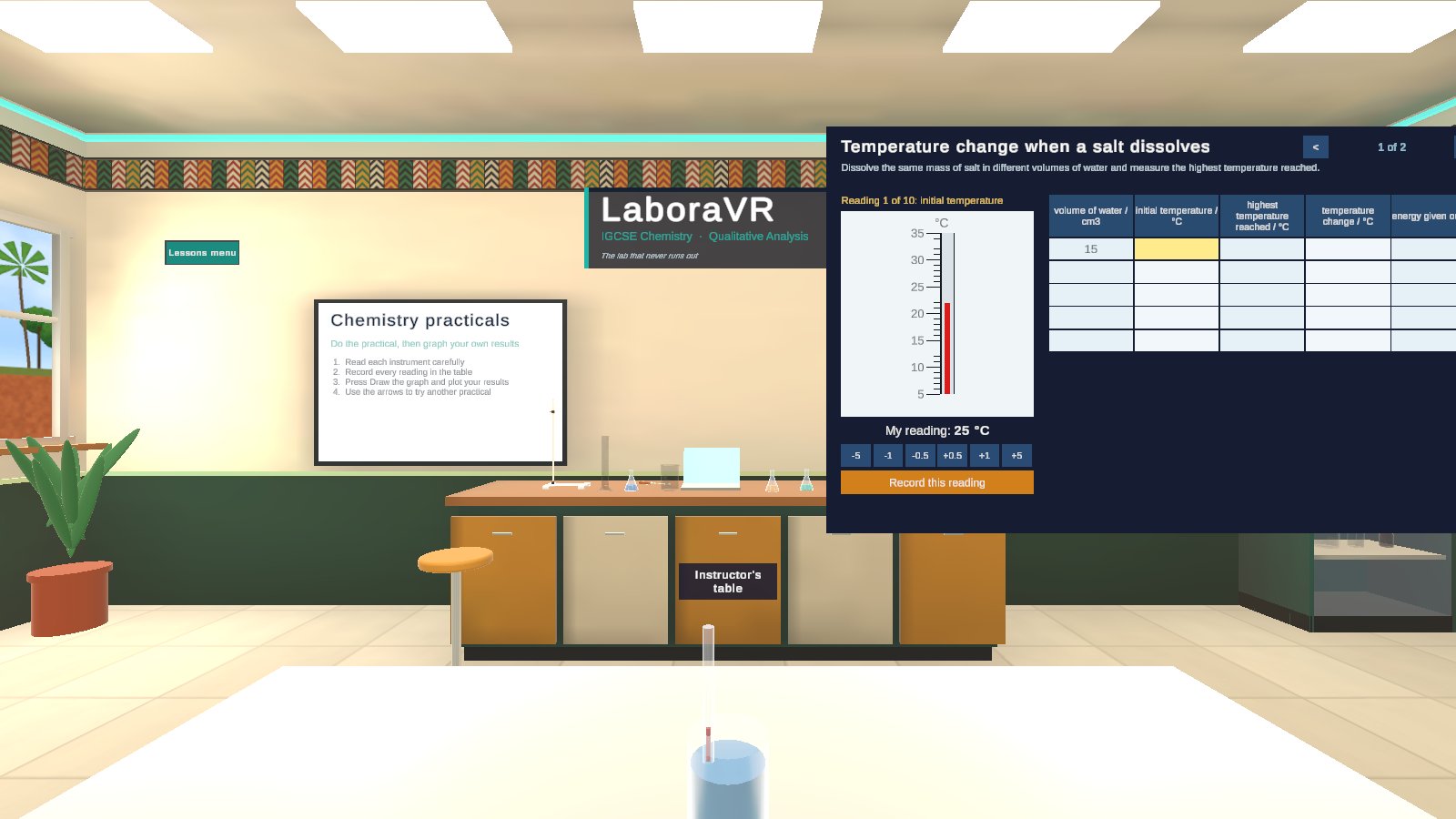
Temperature change when a salt dissolves: the reading table in the lab.
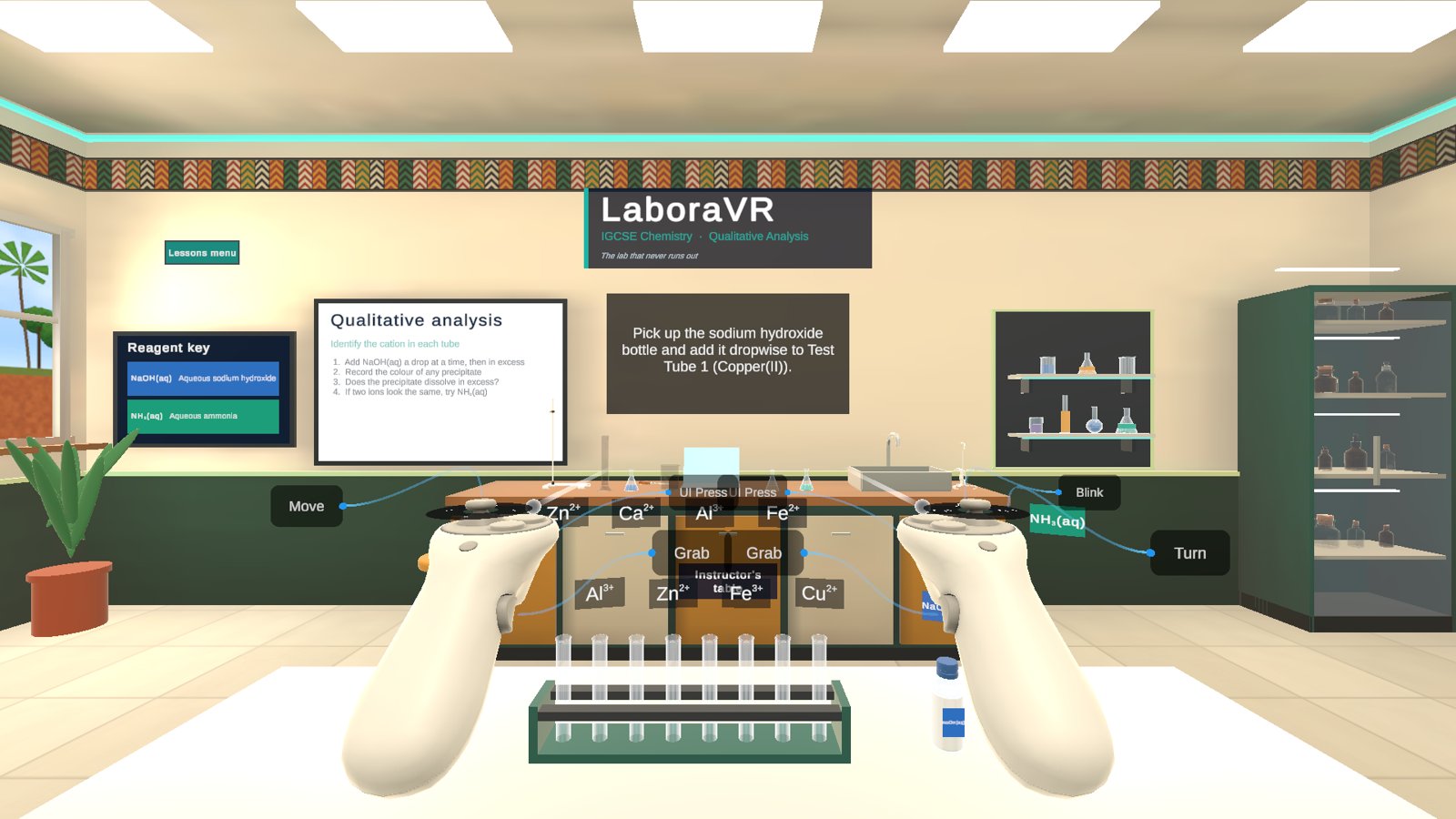
The qualitative analysis lesson, seen from inside the headset with the controllers.
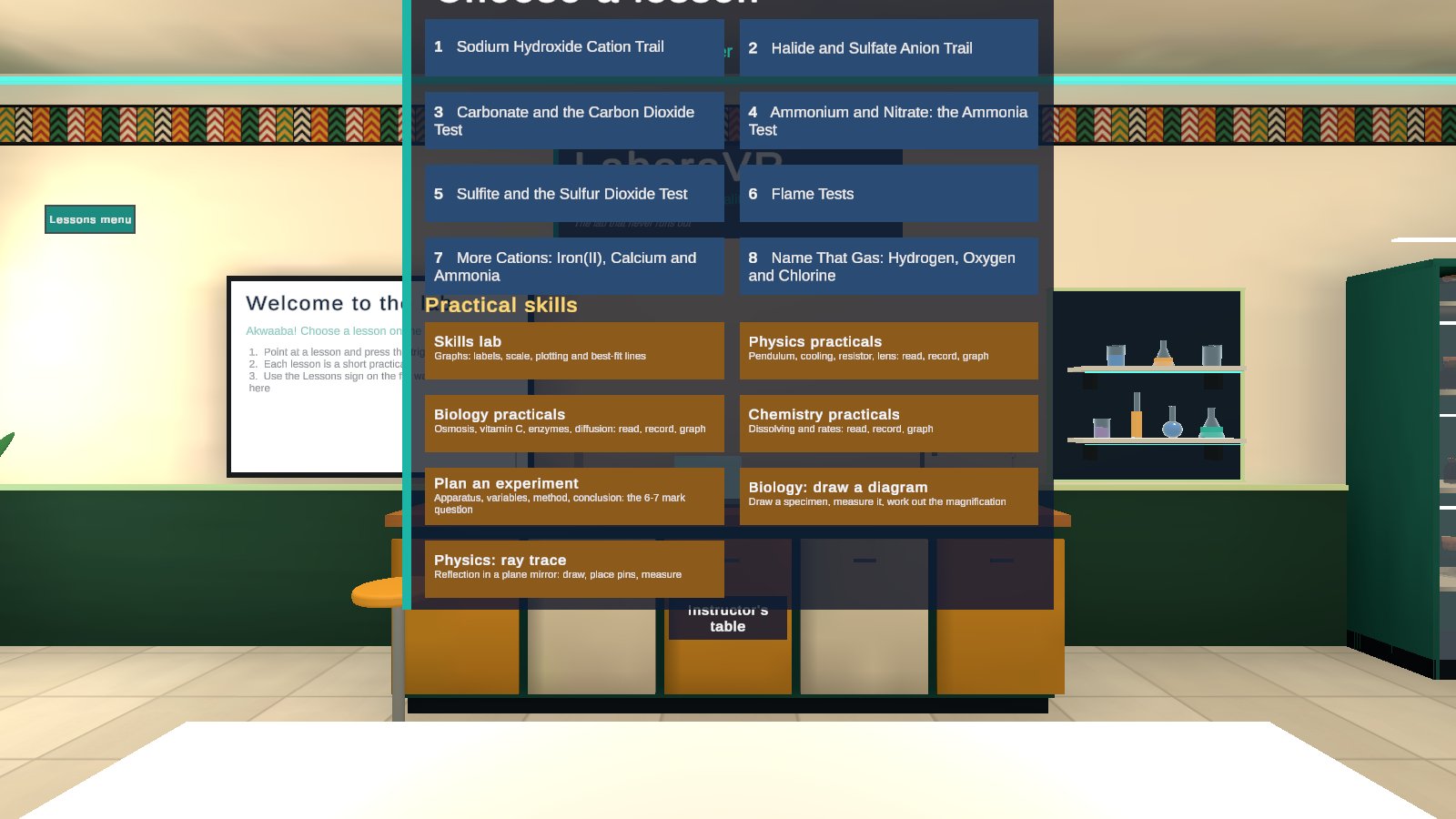
The lab lobby, where students choose a lesson.
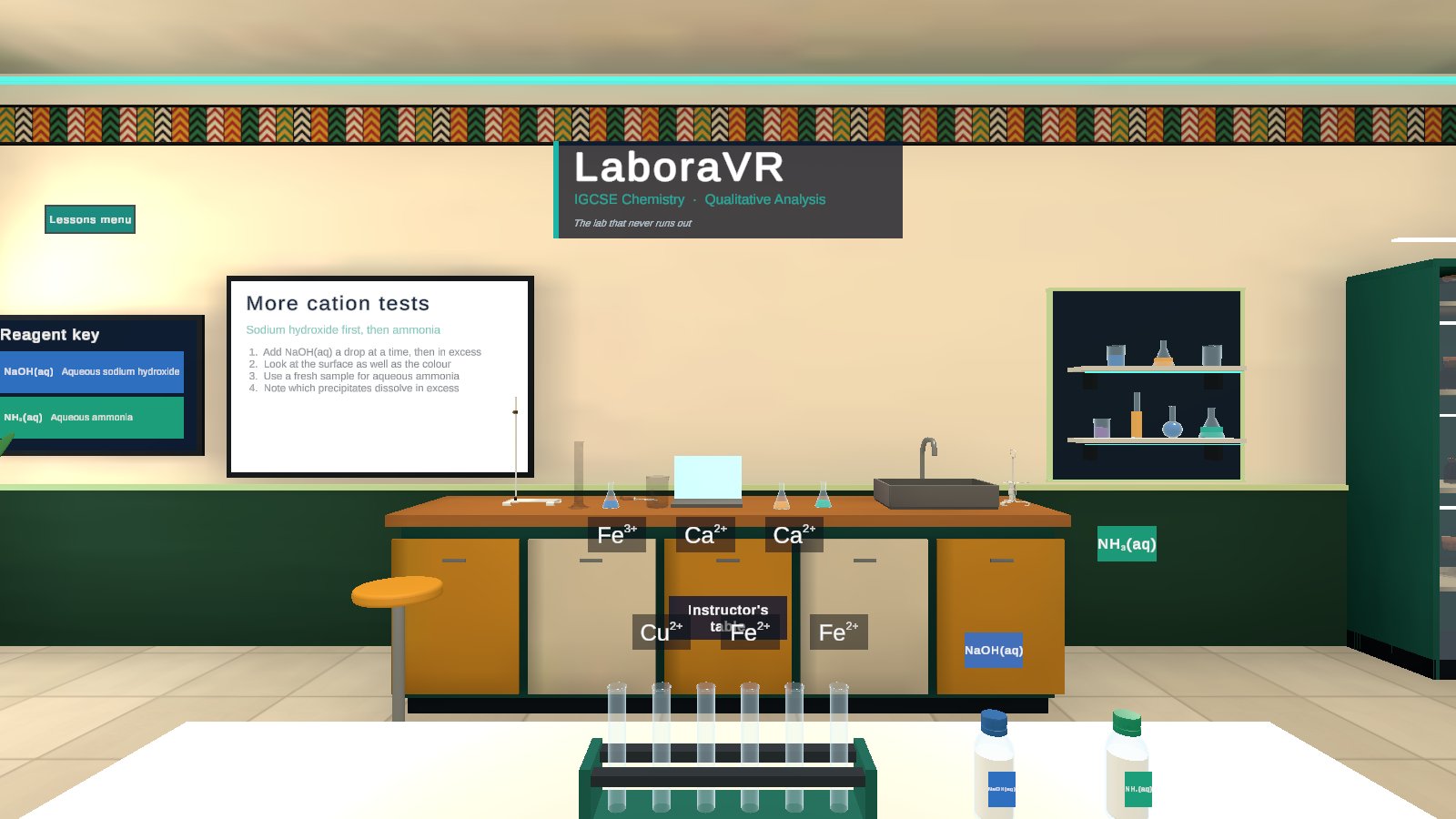
More cation tests: sodium hydroxide first, then ammonia, with the reagent key.
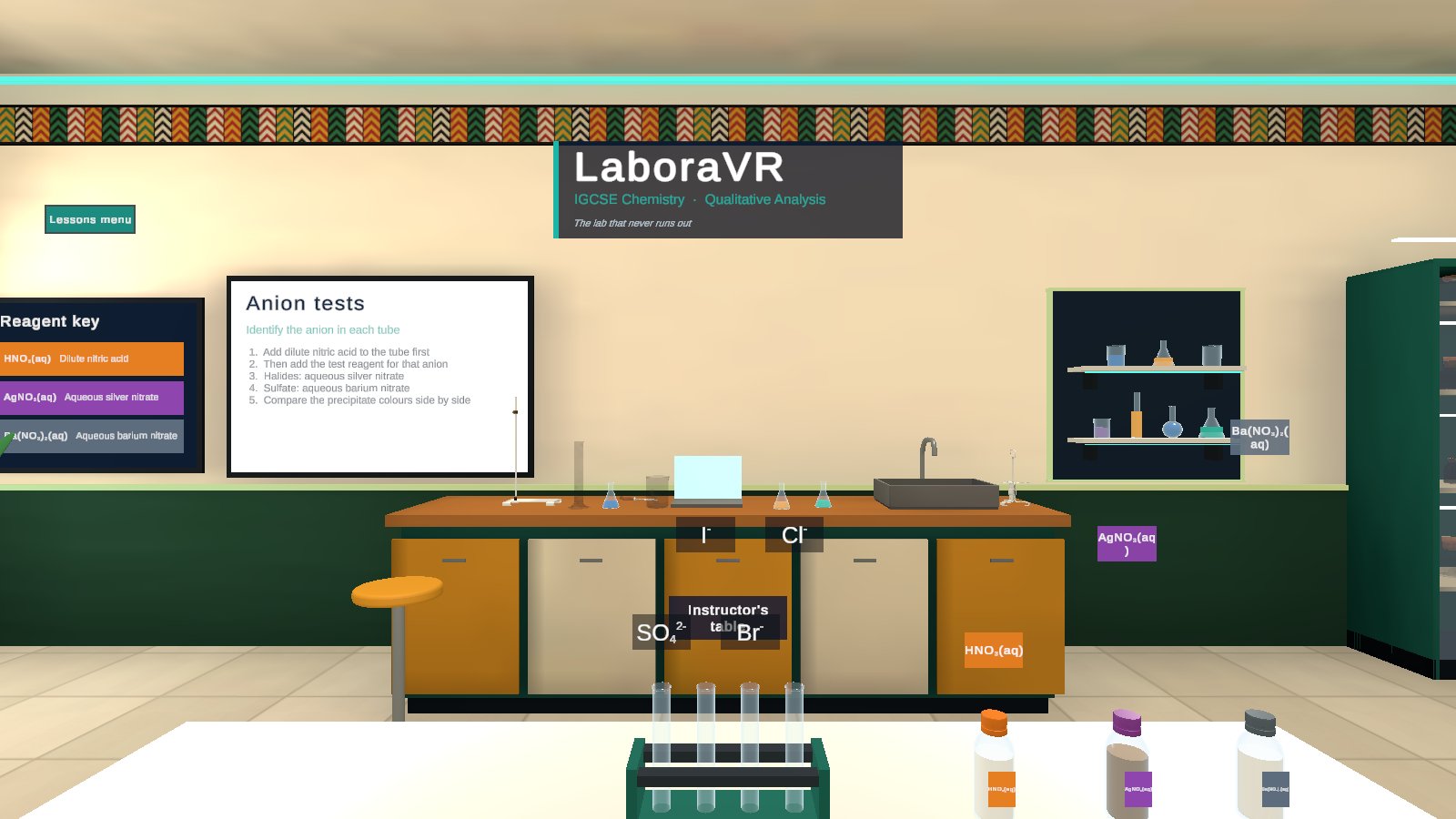
The anion test bench.
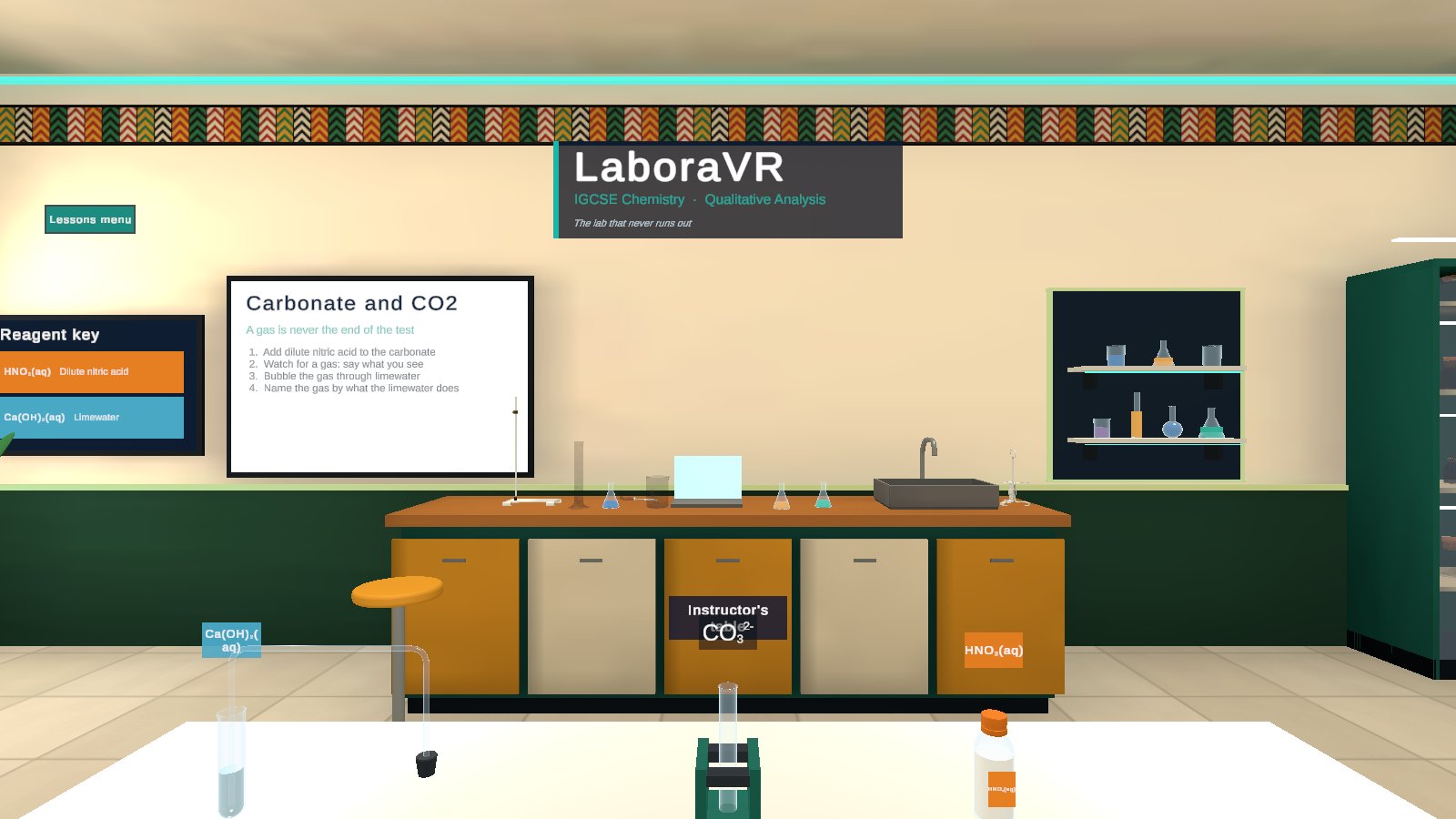
The carbonate test bench.
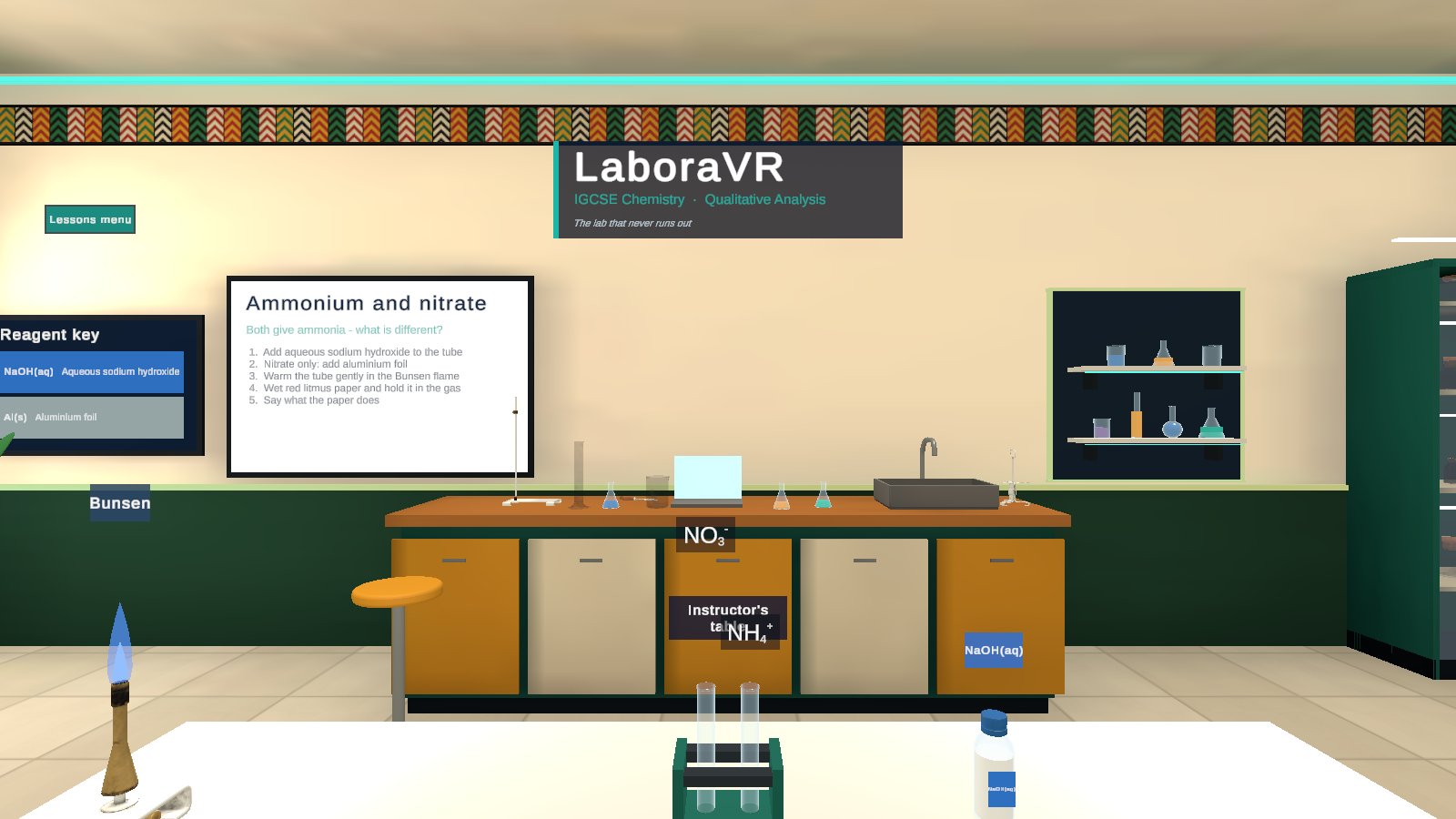
The ammonia test bench.
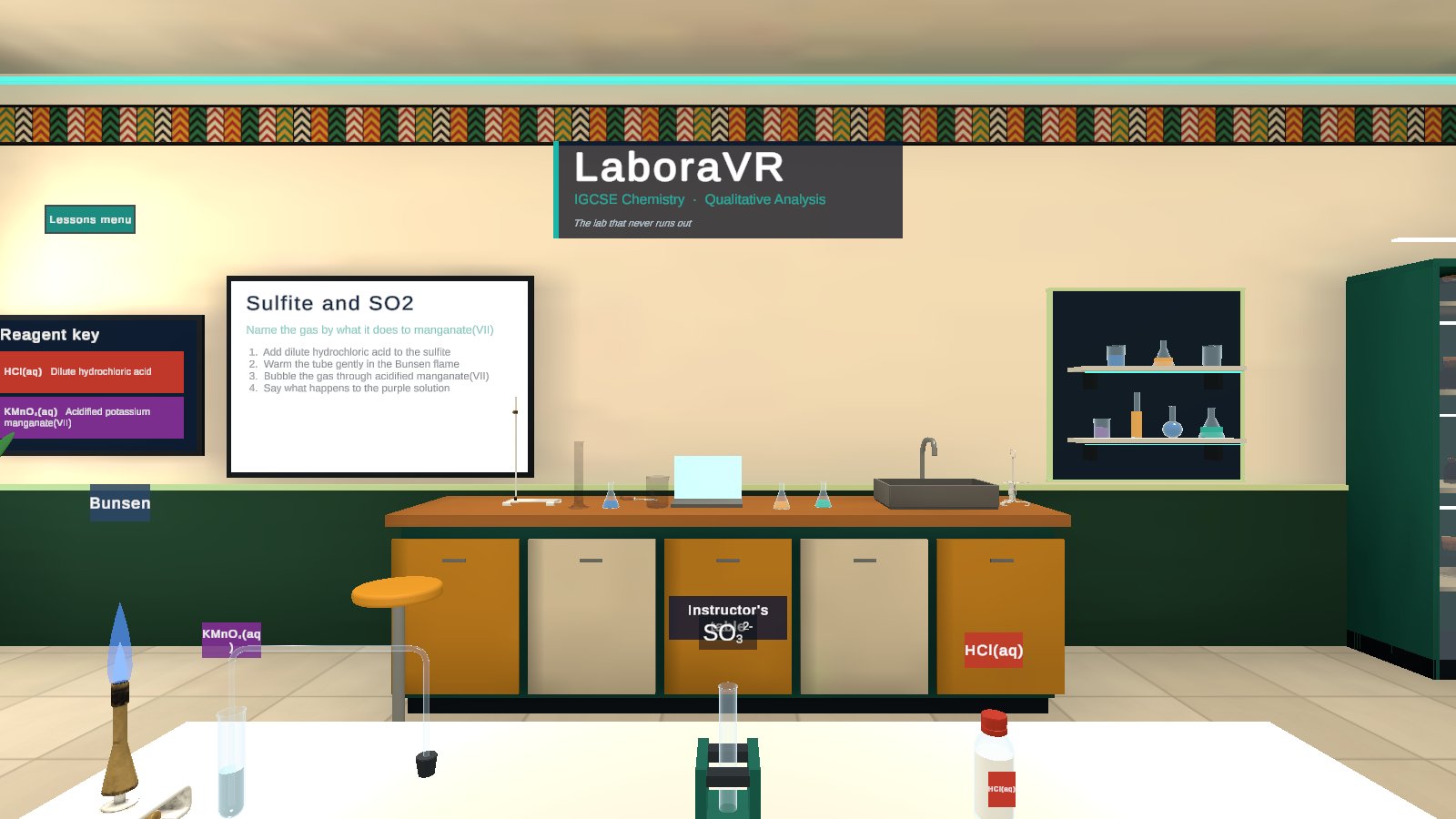
The sulfite test bench.
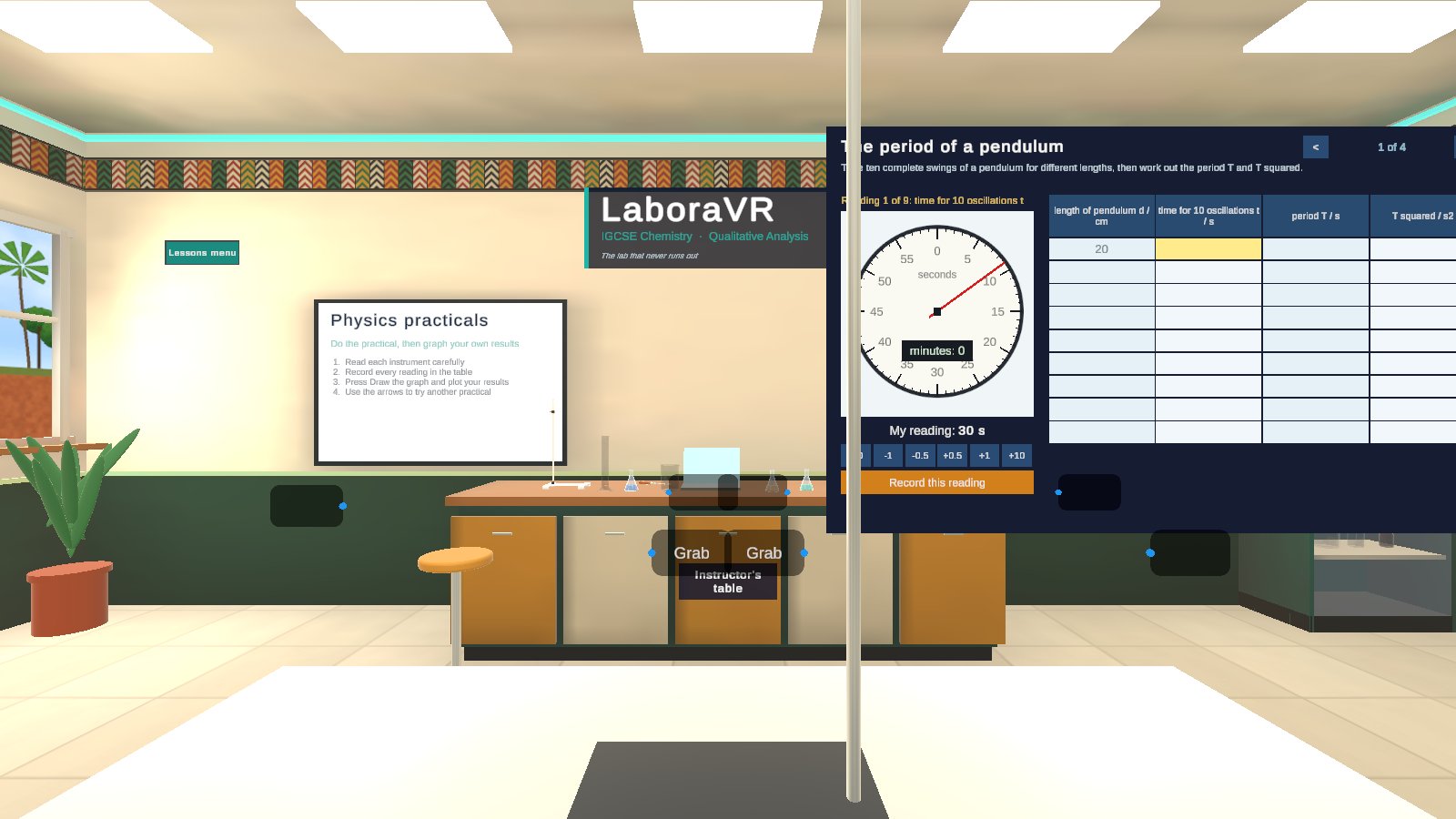
The period of a pendulum: timing ten swings and recording the results.
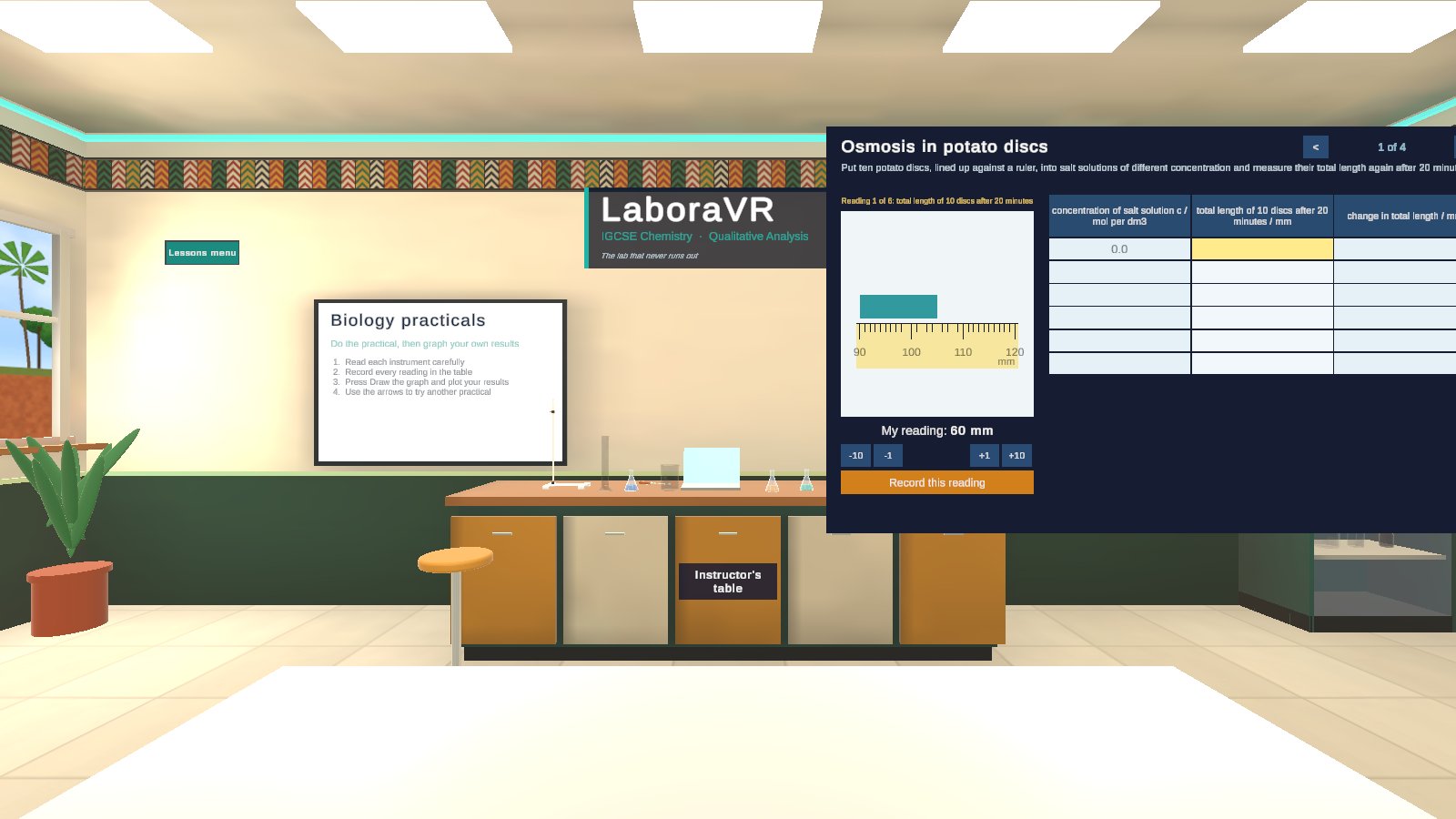
Osmosis in potato discs: measuring the lengths of the discs in each salt solution.
Something missing from that list?
That's the useful conversation. Tell us which practical your department can't reliably run, and it goes to the front of the queue.